
1. Introduction: Global Trends in Fluorocarbon Management and Japan’s Position
Fluorocarbons (CFCs, HCFCs, HFCs, and HFOs) have long been used in a wide range of applications, including refrigeration and air conditioning equipment, insulation foams, and fire extinguishing agents. CFCs and HCFCs have been completely phased out under the Montreal Protocol, and the Kigali Amendment adopted in 2016 mandates the gradual reduction of HFC consumption. As a result, fluorocarbons are positioned as substances that must be managed for both ozone layer protection and climate change mitigation.
In Japan, the Fluorocarbon Emission Control Law requires emission reductions across the entire lifecycle—manufacturing, use, and disposal. However, challenges remain, including stagnant recovery rates at disposal and uncertainties related to emissions from insulation foams. Japan is a leading country in HFC reduction and has advanced institutional frameworks for recovery and reclamation. Nevertheless, emissions from insulation foams and cylinder management remain common challenges globally. This paper reviews Japan’s fluorocarbon material flow and proposes policy and technical directions for implementing a Refrigerant Management Circle (RMC) that can be applied in other countries.
2. Japan’s Fluorocarbon Material Flow: Visible and Invisible Emissions
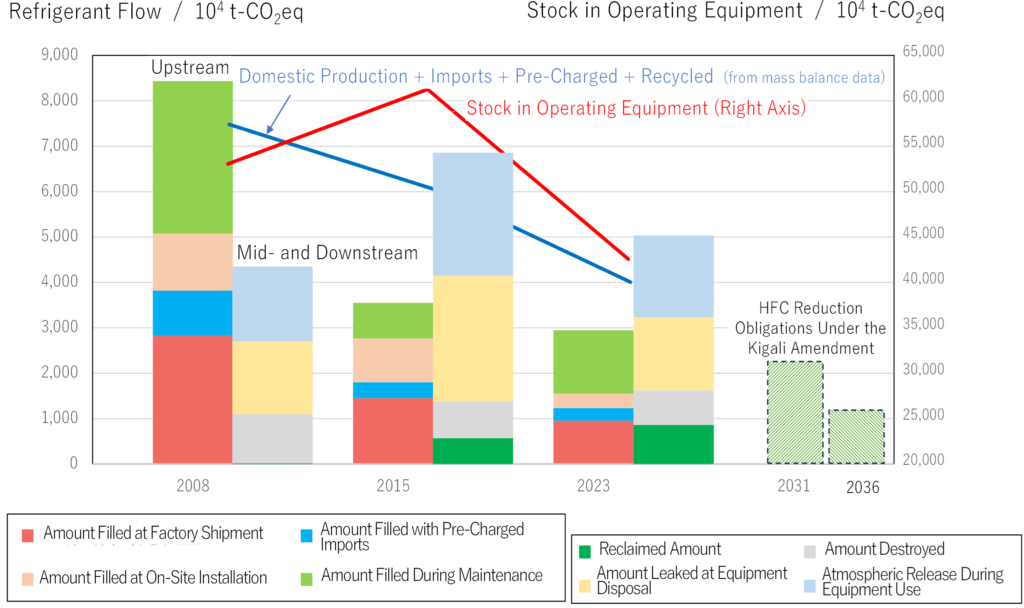
Figure 1: Material flow of CFCs, HCFCs, and HFCs in Japan in 2008, 2015, and 2023 (IPCC AR5 100‑year)
Figure 1 illustrates the material flow of CFCs, HCFCs, and HFCs in 2008, 2015, and 2023 in CO₂-equivalent terms. The figure integrates production/imports, equipment charging, leakage during use, releases at disposal, and recovery/reclamation/destruction. It clearly shows that emissions at disposal remain substantial. HFC consumption has decreased in line with the reduction schedule, and Japan achieved its 2024 target with consumption at 32 million t CO₂. However, the recovery rate at disposal has stagnated at 40–44% in recent years. Despite legal obligations, a significant amount of refrigerant is released into the atmosphere. Leakage from commercial refrigeration and air conditioning equipment also remains high, with total HFC releases reaching 31 million t CO₂ in 2023.
Emissions from CFCs and HCFCs contained in insulation foams in refrigerators and buildings are difficult to quantify. Due to the long lifetime of buildings, emissions are spread over several decades. Buildings constructed from the 1970s to the 1990s contain large quantities of R11 and R12 with very high GWPs, making atmospheric release during demolition highly likely. Residual gas emissions from refrigerant cylinders are also a concern. In Japan, well over 500,000 non-refillable cylinders (NRCs) are estimated to circulate annually, and improper disposal or residual gas release poses environmental risks.
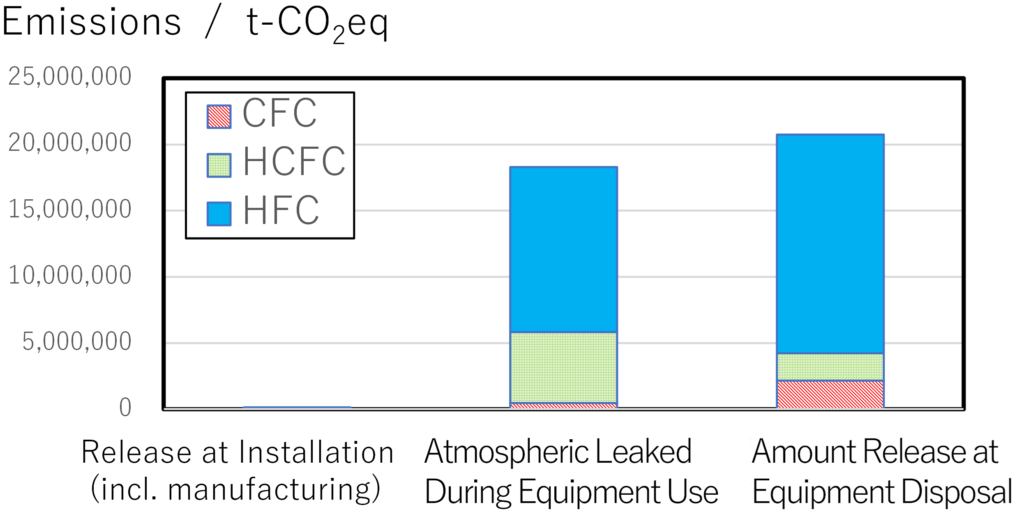
Figure 2: Emissions of CFCs, HCFCs, and HFCs in Japan by lifecycle stage (FY2023, GWP: IPCC AR5)
Figure 2 shows emissions of CFCs, HCFCs, and HFCs during manufacturing, use, and disposal. Manufacturing emissions are limited, while leakage during use and releases at disposal account for the majority. HCFC leakage from commercial equipment is particularly significant. Although CFC and HCFC emissions fall under the Montreal Protocol, they are not included in greenhouse gas inventories under the Paris Agreement. This institutional gap weakens incentives to reduce ODS emissions.
Recent studies by NOAA¹ and UNEP² report atmospheric concentrations of R11 higher than expected, suggesting emissions from insulation foams or possible illegal production. Japan faces similar challenges, including insufficient data on insulation foam stocks and disposal-related emissions. Japan’s insulation foam emissions represent a typical case of “invisible ODS emissions” in the global context. In many developing countries, emissions of HCFCs and even CFCs remain substantial, highlighting the need for flexible international frameworks tailored to national circumstances.
In the EU, revisions to the F-gas Regulation mandate a complete ban on NRC cylinders and require transparency in reclaimed refrigerant markets. In the United States, the AIM Act promotes residual gas recovery and the use of reclaimed refrigerants. In Asia, HCFC phase-out and HFC reduction are progressing simultaneously, and Vietnam has introduced a government registration system for charging and recovery quantities.
3. The Need for Circular Refrigerant Management (RMC)
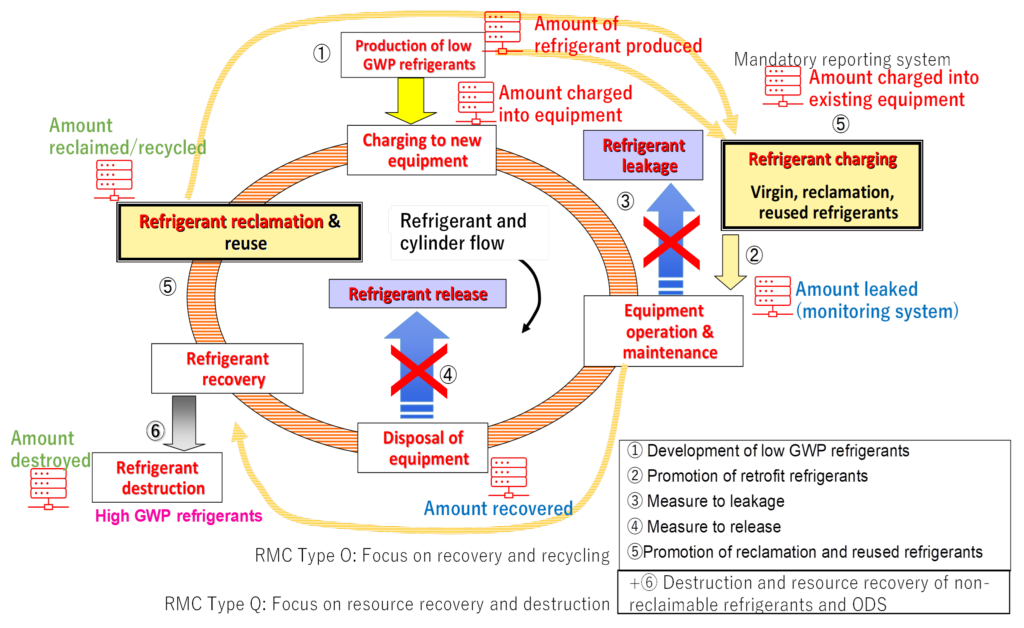
Figure 3: Concept of the Refrigerant Management Circle (RMC) and the role of management data
Figure 3 presents the concept of the Refrigerant Management Circle (RMC), which integrates refrigerant supply, use, recovery, reclamation, and destruction. Data from refrigerant cylinders play a central role in enabling this circular system as cylinder level information provides traceability across the entire refrigerant lifecycle. RMC can be implemented in other countries, and similar models are already being piloted in some regions. Improving recovery rates at disposal requires standardized removal procedures, transparent recovery costs, enhanced outreach to equipment owners, and measures against informal disposal routes. Reclaimed refrigerants are important for reducing environmental impacts and promoting resource circulation, but in Japan, quality assurance systems and market transparency remain insufficient, limiting reclaimed refrigerant to about 20% of total supply.
Proper cylinder management is also essential. Issues include cross-contamination of refrigerants, residual gas release, and the use or storage of corroded cylinders. A system that manages the entire cylinder lifecycle is needed. Future measures should combine economic and institutional instruments, such as subsidies or buy-back programs for recovery and reclamation, incentives for using reclaimed refrigerants, and certification schemes for proper recovery operators. These measures can enhance the effectiveness of circular (Type O) refrigerant management. Type O refers to circular refrigerant management centered on recovery and reclamation. Type Q refers to a circular resource model in which refrigerants unsuitable for reclamation—including CFCs and HCFCs—are destroyed and their by-products are recovered as resources or used in material production. Establishing Type Q systems is important for both resource circulation and greenhouse gas reduction.
4. Digital Cylinder Tracking and Refrigerant Management: Development and Outcomes of RefCyl
To address these challenges, the Japan Society of Refrigerating and Air Conditioning Engineers (JSRAE) developed the refrigerant cylinder management system RefCyl, which has been under pilot operation since 2023³. RefCyl features QR-code identification for each cylinder, cloud-based history management, electronic recovery applications, linkage with existing systems, and an OverPlatform³ concept enabling cross-operator management. Digital management of both cylinders and refrigerants has strong potential for international deployment. As of June 2026, more than 80,000 cylinders have been registered and over 43,000 cylinders have been recovered. The estimated amount of recovered and reclaimed refrigerant (including residual gas) is about 17 tons, corresponding to approximately 34,000 tons of CO₂ reduction. These outcomes contribute significantly to reducing environmental impacts and preventing accidents. In addition, RefCyl enables the analysis of cylinder return time, which is a major blind spot in global refrigerant management. Preliminary data show distinct patterns among refrigerant types, such as longer return times for R22 and R404A and shorter cycles for R410A.
5. Visualizing Refrigerant Flows Using the K-Plot
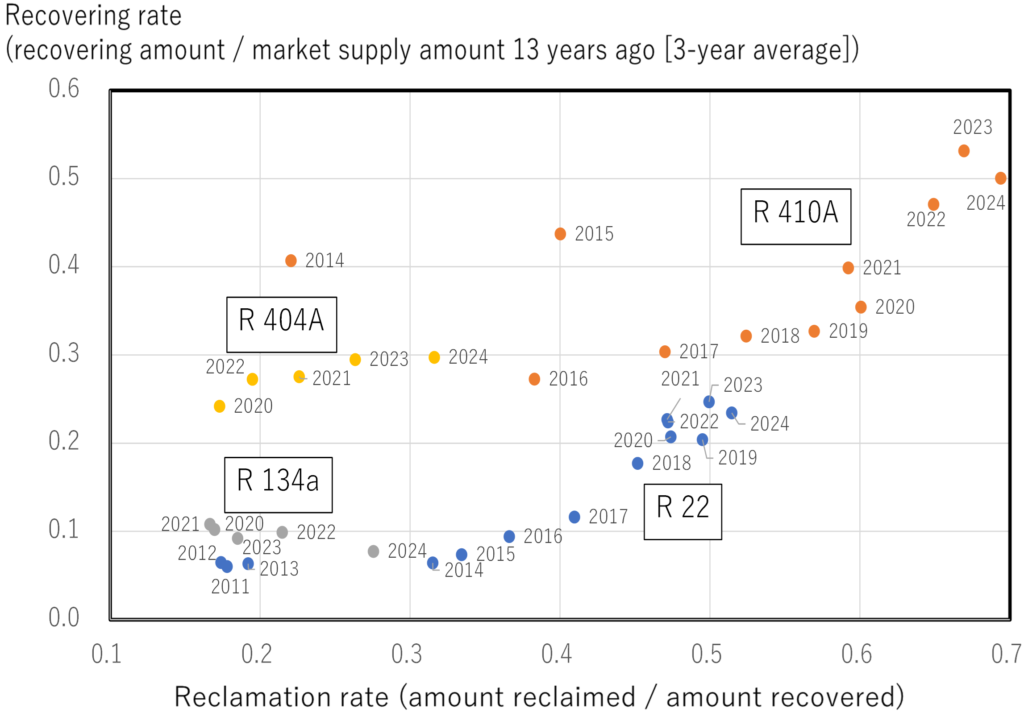
Figure 4: Relationship between recovery rates and reclamation rates based on mass balance (K Plot)
Figure 4 shows the K-Plot, which visualizes the relationship between refrigerant recovery rates and reclamation rates4. A positive correlation is observed for R22, R410A, and R32 (included in the analysis but not shown in Fig.4), indicating that the use of reclaimed refrigerants contributes to higher recovery rates. In contrast, correlations for R134a, R404A, and R407C (included in the analysis but not shown in Fig.4) are weaker, suggesting that reclamation is more difficult due to processing rules or refrigerant characteristics. When combined with cylinder return time data, the K‑Plot provides a unique perspective on refrigerant circularity, revealing differences in field retention and reclamation feasibility among refrigerant types.
6. Conclusion: Japan’s Path Toward Circular Refrigerant Management
Japan’s refrigerant management system is advanced by international standards, yet challenges remain: stagnant recovery rates at disposal, uncertainties in insulation foam emissions, an underdeveloped reclamation market, and insufficient cylinder traceability. Digital systems such as RefCyl represent an important step toward achieving circular refrigerant management, particularly for Type Q, and constitute a pioneering initiative globally. This experience can contribute to the advancement of refrigerant management worldwide. Strengthening management across the entire refrigerant lifecycle will be essential to achieving both the Kigali Amendment reduction schedule and broader climate mitigation goals.
References
¹NOAA Global Monitoring Lab., AGGI & ODGI, 2024. ²UNEP Ozone Secretariat, Scientific Assess. of Ozone Depletion, 2022. ³ JSRAE Refrig. Cylinder Mgmt. System Research Proj. (GL: N. Kagawa),“Dev of RefCyl and New Concepts for Cylinder Management,” High Pres.Gas, 2025, 61(10), 4–9 (in Japanese). 4 N. Kagawa,“Current Situation and Future Outlook of Refrigerants for Refrigeration and Air Conditioning,” Clean Technology, 2024, 34(10), 39–47 (in Japanese), N. Kagawa,“New Refrig. Management Circle and K‑Plot for Reducing GHG Emissions,”Proc. 20th Eur. Conf. UNEP‑IIR‑AREA‑CSG, Milano, June 2023.

Noboru Kagawa