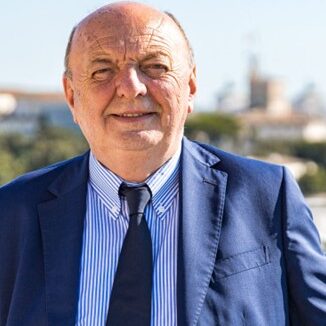
Forewords by the Italian Minister of Environment and Energy Security
With EU Regulation 2024/573, Europe has profoundly reshaped the European legal framework governing refrigerant gases. The decision to rapidly phase out the use of current refrigerants due to their high climate impact and replace them with alternatives with zero or low climate impact entails technological, economic and commercial challenges.
Just over two years after the Regulation entered into force, the Italian industry is addressing this transition with its customary determination and capacity for innovation and renewal.
We are entering a decisive phase, as many of the requirements set out in the Regulation will enter into force in 2026 and 2027. Over these two years of intensive work, the Ministry of the Environment and Energy Security has supported the refrigeration sector through the challenging process of implementing the new legislation, acting as an advocate with the European institutions for interpretative solutions capable of addressing the inevitable difficulties that the application of the new rules has posed for Italian and European industry, while fully respecting the climate objectives.
2026 will also mark the full implementation of European rules into the Italian legal system, with the preparation of a new Presidential Decree to replace the current Presidential Decree No. 146 of 2018. This will be an essential step to enable the thousands of refrigeration professionals to operate in full compliance with European legislation.
At the same time, we are aware that Europe’s decision to move beyond the era of climate-damaging refrigerants has led to a worrying increase in illegal trade, managed by transnational criminal organisations.
In this regard, MASE, as the National Competent Authority, has taken decisive and effective action, working in cooperation with the Customs and Monopolies Agency, the Carabinieri NIPAAF and NOE units, and the Guardia di Finanza.
Among the most significant new initiatives is the establishment of a coordination table on F-gas controls, aimed at developing new methodologies and tools, creating a network of technical analysis laboratories, facilitating the exchange of data and information, planning inspection and enforcement campaigns, and promoting training and awareness-raising on the issue.
These coordination efforts have already produced significant results, with the seizure of dozens of tonnes of illegally traded refrigerant gases of foreign origin across virtually the entire country.
Much work remains to be done, but it is encouraging to see growing awareness among businesses, industry professionals and Italian citizens of refrigeration-related issues: the need to phase out current refrigerants because of their serious climate impact, and the importance of choosing legally traded refrigerant gases.
Awareness, institutional coordination, attention to the productive sector, and determined action against illegal activities are the key elements for achieving these objectives.
Degree in Economics and Commerce – University of Turin (TO) Professional activity: • Chartered Accountant and Statutory Auditor – Studio in Biella • Member of the Order of Chartered Accountants and Accounting Experts of Biella • Registered in the Register of Auditors • Business consultant in the corporate, tax, business and professional sectors, Mayor and Statutory Auditor for Companies and Auditor of Local Authorities • Former Accounting Teacher at the I.T.C. “AND. Bona” of Biella, and of Banking Technology and Commercial at the I.T.C. “C. Cavour” in Vercelli
Political activity: From 1975 to 1980 Municipal councilor of Gifflenga (Bi). From 1981 to 1985 member of the Management Committee of Local Health Unit 48 Piedmont. From 1985 to 1994 Deputy Mayor of Biella with responsibilities for Sport, Tourism, Transport and toponymy until 1992 and subsequently with delegations to Urban Planning and Construction private. In 1995 elected to the Regional Council on the Forza Italia list in the constituency of Biella, president of the 1st Commission and in 1997 appointed Regional Councilor of Industry, Crafts and Commerce. In 2000 elected to the Regional Council and appointed councilor with responsibilities for Industry, Work, New economy, Professional training, Coordination of policies and funds Community, International Affairs, Domestic and Foreign Trade and – since 2001 – appointed also skills in budget and finance, personnel and its organisation, Programming, Efficiency Policies, Management Control. In 2005 elected for third time in the Regional Council on the Forza Italia list and, from June 2006 to December 2007 Vice President of the Regional Council. In the XVI legislature (2008-2013) elected to the Senate of the Republic on the list of “Il People of freedom”. He was secretary of the Fifth Permanent Commission Economic planning, Budget, since 2010 Leader of the People’s Group Libertà and also member of the XI Permanent Commission on Work, Social Security, and the Parliamentary Commission of Inquiry into the phenomenon of accidents at work, with particular regard to the so-called “unrelated deaths”. On 20 March 2013 – during the IX legislature – he was appointed Vice President of the Piedmont Region with responsibilities for budget and finance, economic-financial planning, heritage, legal and litigation. In 2014, candidate for President of the Piedmont Region for Forza Italia, elected in Regional Council from his “Centre Right for Pichetto” list and Forza Italia group leader in the Piedmont Region until 2018. In the XVIII legislature (2018) elected to the Senate of the Republic on the Forza Italia lists in Piedmont in the single-member constituency of Biella-Vercelli. He was treasurer of the Group Forza Italia Berlusconi President-UDC and held the position of Group Leader for Forza Italy in the Budget Committee until 1 March 2021. On 1 March 2021 he was appointed Undersecretary of State at the Ministry of Development Economy of the Draghi Government. On 15 April 2021 the decree of the Minister of Development is published in the Gazette economic who assigns the following delegations: – functions relating to industrial policy, policies for small and medium-sized enterprises, to the defense industry, business incentives, as well as initiatives and activities relating to Made in Italy and creative industries, trade and self-service e to craftsmanship; – initiatives and activities relating to the universal postal service and the postal market, to matters of insurance services, insurance legislation, relationships with IVASS and the supervision of CONSAP funds; – the discussion and implementation of initiatives in matters relating to the market and protection and the promotion of competition and legislation on liberalization, administrative simplification, consumer policies, supervision and regulations technical, as well as supervision of the Chambers of Commerce, their unions and special companies, Unioncamere and chamber system; – activities relating to the fight against counterfeiting, as well as institutional coordination on the matter at an international level, the promotion and valorisation of industrial property rights, patents and trademarks and the initiatives and policies aimed at bringing the world of research closer together that of businesses. On 15 April 2021 he was awarded the title of Deputy Minister at the Ministry of Development Economy of the Draghi Government. On 13 May 2021 he was appointed by decree of the Minister of Economic Development President of the National Council of Consumers and Users, position reconfirmed also subsequently with ministerial decree of 3 March 2022. On 8 July 2022 he was designated member of the National Observatory for Integration of policies for gender equality by the Minister of Economic Development in representation of the Ministry itself. During his mandate, on the basis of the delegations assigned to him, he followed numerous related issues particularly to the automotive sector, trade and industrial policies. To this end it has chaired various thematic tables that addressed the various sectors for constant comparison active and proactive with all interested stakeholders. He also worked to define an industrial policy strategy aimed at identifying the necessary measures for the relaunch of the country and the Piedmont area, taking into account consideration for the latter, the advantage of making use of the potential of the territory in terms of existing scientific skills, infrastructures and professionalism, from universities to businesses, to workers. In the XIX Legislature he was elected to the Chamber of Deputies, in the Multi-member College Piedmont 02.