
Abstract: This paper highlights UNEP OzonAction’s efforts to advance gender and youth inclusion in the refrigeration and air-conditioning (RAC) sector as part of the global transition to sustainable cooling under the Montreal Protocol and the Kigali Amendment. It showcases initiatives across regions, including a Caribbean pathway to boost youth participation in the sector, Zimbabwe’s evidence-based gender action plan, and targeted training programmes for female professionals in Africa and South Asia. These initiatives address key barriers such as limited access to training, stereotypes and biases, and underrepresentation in leadership. A strong emphasis is placed on skills development, mentorship, and inclusive policies to empower women and young professionals. The International Network of Women in Cooling (INWIC) further strengthens global collaboration through mentorship and knowledge exchange. Overall, the paper demonstrates that coordinated, gender-responsive approaches are essential to building a diverse, skilled workforce and achieving climate-friendly cooling transitions.
Accelerating Progress in the Cooling Sector: UNEP OzonAction’s Global Momentum on Gender
By Sonja Wagner, Programme Management Officer / Gender Focal Point, UNEP OzonAction
Across the globe, the refrigeration and air-conditioning (RAC) sector is playing an increasingly vital role in advancing climate action and sustainable development. As countries transition towards energy-efficient and climate-friendly cooling solutions, there is a growing recognition that a diverse workforce is essential to meet emerging demands. Through initiatives spanning youth engagement, gender-responsive policies, technical training, and global mentorship through INWIC, UNEP OzonAction is supporting countries and partners to empower women and young professionals, ensuring that the future of cooling is not only sustainable, but fair and opportunity-driven.
Caribbean Youth Pathway: Building the Next Generation of Cooling Professionals
The Caribbean is taking decisive steps to empower a new generation of skilled technicians through a structured Pathway to Increase Youth Participation in the Refrigeration Servicing Sector (RSS). Developed following regional consultations in Belize and Grenada, the initiative responds to growing demand for skilled labour in sustainable cooling while addressing youth unemployment and gender gaps in technical professions.
At its core, the pathway adopts a comprehensive framework spanning six key areas: awareness, education, gender inclusion, industry engagement, youth networks, and policy support. This multi-stakeholder approach reflects the understanding that transforming the refrigeration and air-conditioning (RAC) sector requires coordinated action across governments, training institutions, industry actors, and youth themselves.
Efforts to improve awareness focus on showcasing RAC careers as attractive, future-oriented opportunities. Campaigns featuring young technicians, including women, are complemented by school outreach, career fairs, and skills competitions aligned with global events such as World Youth Skills Day. These initiatives aim to shift perceptions and highlight the sector’s income potential, technological innovation, and role in climate action.
Access to training and certification remains another central pillar. The pathway emphasizes expanding technical and vocational education and training (TVET), introducing blended learning models, and offering scholarships, particularly for women. Such measures are designed to reduce entry barriers and ensure that youth from underserved communities can participate in the sector.
Importantly, gender is embedded throughout the pathway. Proposed actions include workplace policies addressing harassment and pay equity, mentorship programmes, and the promotion of female role models. This reflects a growing recognition that achieving sustainable cooling transitions depends on unlocking the full potential of women and youth.
Private sector engagement is also key. Companies are encouraged to provide internships and apprenticeships while governments should integrate inclusive language in procurement processes to support youth- and women-led businesses. At the same time, youth networks and digital communities should be strengthened to foster peer learning and regional exchange.
By combining policy, education, and social change, the Caribbean pathway offers a replicable model for building a diverse, future-ready workforce, ensuring that young people, especially women, can actively contribute to climate-friendly cooling solutions.
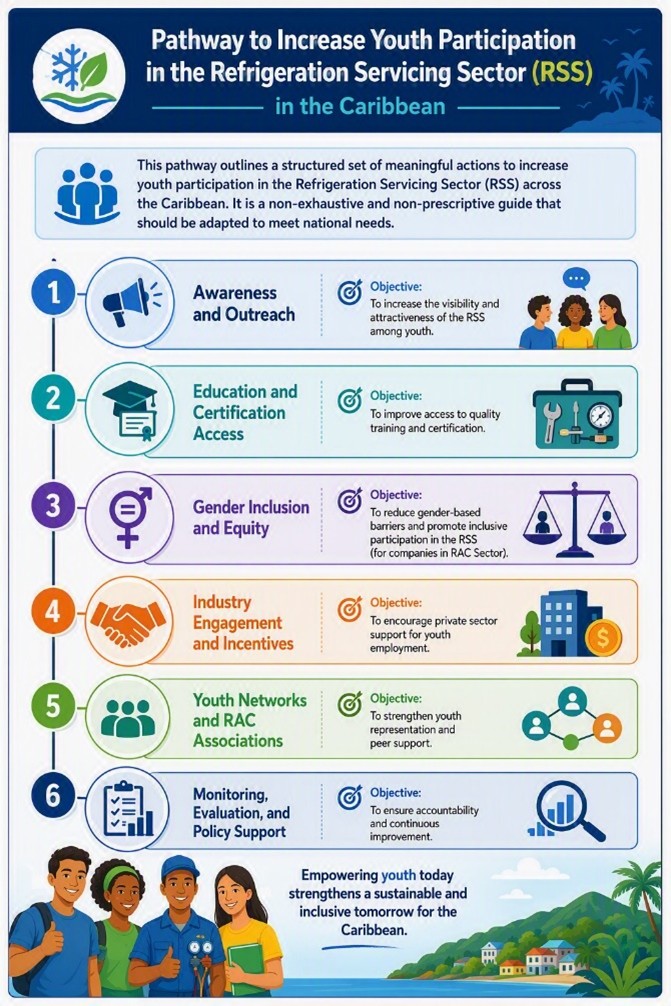
The Caribbean pathway promotes youth participation in refrigeration through awareness, training, and gender inclusion initiatives. It emphasizes TVET expansion, mentorship, and private-sector engagement to create opportunities for young professionals.
Page 2 – Zimbabwe: Evidence-Based Action for Gender Equality in Cooling
Zimbabwe has emerged as a leader in advancing gender equality in the cooling sector through a national survey, targeted workshops, and a draft action plan that together form a robust, evidence-based approach to reform.
The National Survey on Women in Cooling provides critical insights into the realities faced by female professionals in the RACHP sector. With 95 respondents nationwide, the study reveals a young workforce, with 44% under 30, largely engaged in technical hands-on roles such as servicing and maintenance.
Despite their technical engagement, women remain underrepresented in leadership positions, with only 11% identifying as business owners and very few in managerial or academic roles. This highlights structural barriers that limit career progression and influence.
The survey also identifies persistent challenges:
- Limited access to career advancement opportunities
- Gender pay gaps, with 65% perceiving lower salaries than men
- Restricted access to training, tools, and funding
- Workplace discrimination and inadequate facilities
Nevertheless, the findings also reveal strong motivation and resilience. Many women are driven by the technical nature of the work, environmental impact, and the opportunity to contribute to climate protection. Notably, 64% reported having access to mentorship, underscoring the importance of support networks.
Building on these insights, a national workshop for female techniciansfacilitated the development of a draft action plan addressing gender-based challenges. Key recommendations include:
- Integrating gender quotas and anti-harassment policies in companies
- Expanding training opportunities and providing tools for women technicians
- Promoting entrepreneurship and supporting women-owned SMEs
- Enhancing awareness campaigns and stakeholder engagement
- Strengthening collaboration between government ministries and industry associations
The action plan also emphasizes behavioural change across all stakeholders – from empowering women practitioners to encouraging male allies and strengthening institutional responses through inclusive policies and enforcement mechanisms.
Together, the survey, workshop, and action plan represent a comprehensive approach that moves beyond diagnosis to actionable solutions – positioning Zimbabwe as a model for gender-responsive programming in the cooling sector.
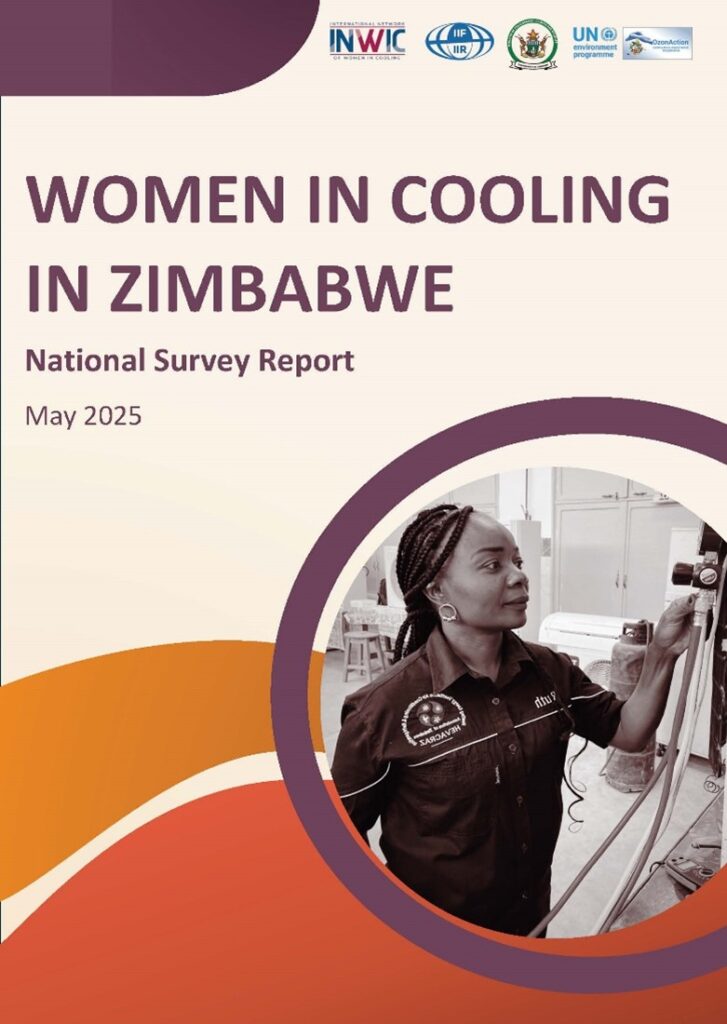
Zimbabwe’s national survey highlights barriers faced by women, including pay gaps and limited advancement.
Page 3 – Training Women Professionals Across Africa and South Asia
Across Africa and South Asia, UNEP OzonAction is accelerating efforts to empower women through targeted training programmes and Training-of-Trainers (ToT) initiatives, ensuring that female professionals can access high-quality skills development and leadership opportunities.
In Anglophone Africa, regional training initiatives have focused on strengthening technical competencies while fostering collaboration among women technicians. Participants have received hands-on training in environmentally friendly refrigeration practices, safety standards, and new technologies, equipping them to meet evolving market demands and contribute to climate goals.
Similarly, a regional workshop in Dakar for Francophone Africa brought together female technicians to build technical skills and create peer support networks. These trainings not only enhance technical expertise but also create safe spaces for women to share experiences and address common challenges, such as workplace discrimination and limited access to opportunities.
In parallel, South Asia has prioritized a Training-of-Trainers (ToT) approach, recognizing the multiplier effect of empowering female trainers and assessors. Through UNEP – ATF training programme, women have been equipped to deliver certified training and mentor the next generation of technicians. This approach ensures sustainability by embedding gender inclusion within national training systems and institutions.
Across these regions, several common themes emerge:
- Skills development as an entry point to empowerment
- Networking and peer support as critical enablers
- Leadership development through ToT programmes
- Integration of gender considerations into technical training systems
These initiatives demonstrate that investing in women’s technical skills not only addresses labour shortages but also improves service quality, innovation, and environmental outcomes. By strengthening women’s roles as technicians, trainers, and leaders, UNEP OzonAction is helping to transform the cooling sector into a more resilient industry.
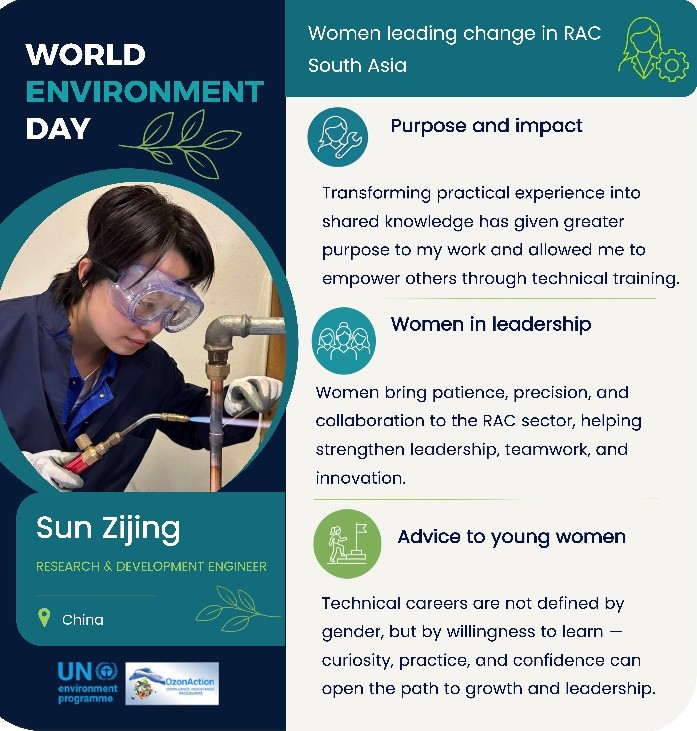
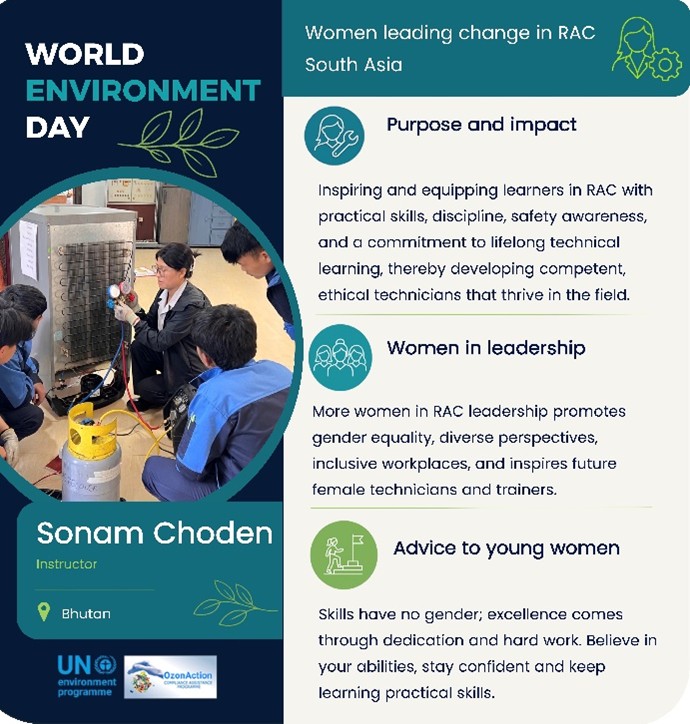
Regional trainings in Africa and South Asia improve skills and leadership of female technicians. Training-of-trainers programmes ensure sustainability and expand impact across regions.
Page 4 – The INWIC Mentorship Programme: Connecting Women Globally
The International Network of Women in Cooling (INWIC) is a global platform dedicated to strengthening the participation, visibility, and leadership of women across the refrigeration and air-conditioning sector. UNEP OzonAction is one of the 13 founding partners of INWIC and plays a key role in supporting its activities by facilitating collaboration, knowledge exchange, and capacity-building initiatives that empower women and expand their opportunities in sustainable cooling industries.
Mentorship has emerged as a powerful tool for addressing many of the barriers identified across regions, from lack of career guidance to limited networking opportunities. The INWIC mentorship programme connects experienced professionals with early-career women, fostering knowledge transfer, confidence-building, and professional growth. Currently, there are around 80 participants in the programme, and around 20 on-going mentor-mentee relationships.
Survey data from Zimbabwe underscores the importance of mentorship, with 64% of respondents reporting having benefited from mentoring support. This aligns with global evidence that mentorship enhances career progression, retention, and leadership development for women in technical fields.
The INWIC initiative goes beyond one-on-one mentoring by creating a global community of practice. Through virtual platforms, workshops, and networking events, participants can share experiences, exchange technical knowledge, and build professional relationships across borders.
Key objectives of the programme include:
- Strengthening leadership capacity among women in cooling
- Expanding professional networks and visibility
- Promoting knowledge exchange and best practices
- Supporting career advancement and entrepreneurship
Importantly, the programme complements national and regional initiatives, such as those in Zimbabwe and the Caribbean, by providing a global dimension to gender empowerment efforts.
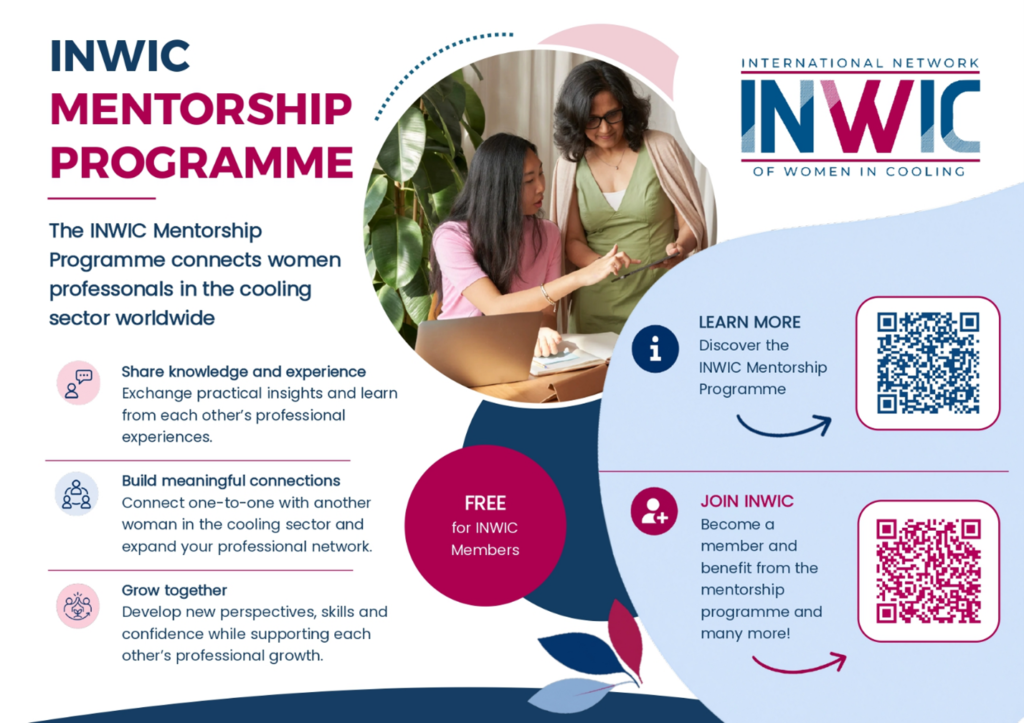
INWIC strengthens women’s leadership, visibility, and professional networks in the cooling sector through global collaboration, mentorship, and knowledge exchange.
Conclusion
From the Caribbean’s youth-focused pathway to Zimbabwe’s evidence-based reforms, and from regional training programmes in Africa and South Asia to global mentorship through INWIC, UNEP OzonAction is advancing a comprehensive and interconnected approach to equal opportunities in the cooling sector.
These initiatives demonstrate that meaningful change requires more than isolated interventions. It demands coordinated action across education, policy, industry, and community level, combined with sustained investment in women’s skills and visibility.
As countries continue to implement the Montreal Protocol and the Kigali Amendment and transition towards climate-friendly cooling solutions, ensuring the full participation of women and youth will be essential. By viewing its programmes through a gender lens, UNEP OzonAction is ensuring more inclusive outcomes and improving the effectiveness and sustainability of environmental efforts.
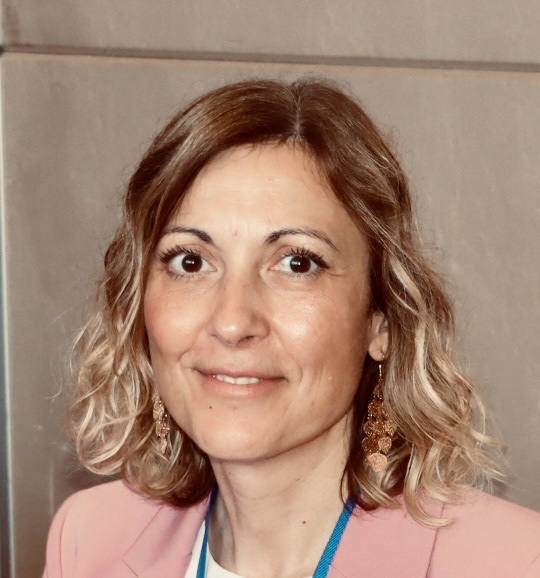
Sonja Wagner