
Empowering the RACHP workforce for the global transition
The challenges of climate change and the commitments under the Montreal Protocol and its Kigali Amendment require a global effort to phase out ozone-depleting substances and phase down HFCs, while meeting the growing demand for refrigeration, air conditioning and heat pumps. This transition depends on skilled technicians who can safely handle alternative refrigerants, reduce emissions and improve energy efficiency. Empowering the RACHP workforce is therefore essential to protecting our planet.
This commitment is at the heart of Centro Studi Galileo’s work and this International Special Issue. Education must keep pace with technological change, connecting international expertise with technicians’ everyday needs. Practical training, knowledge sharing and cooperation between institutions and industry turn environmental objectives into effective action.
We are currently carrying out numerous projects with UNEP, UNIDO and UNDP, supporting workforce development across continents. These collaborations bring together trainers, technicians, national authorities and local organisations to strengthen technical capacity and improve refrigeration practices. Training local trainers enables knowledge to spread through national training centres and professional networks, extending the benefits well beyond individual courses.
Recent training activities delivered by Centro Studi Galileo and ATF include:
- Philippines: training for 50 trainers in Manila with UNIDO and TESDA, covering good servicing practices and the safe handling of low-GWP and flammable refrigerants.
- Rwanda: practical training on sustainable cooling, maintenance, refrigerant recovery, leak prevention and energy efficiency, within the CCAC/UNEP-funded project implemented by ICU with REMA and CSG.
- Burkina Faso, Tunisia and other African countries: training on good refrigeration practices, safe refrigerant handling and energy efficiency, alongside support for local training centres and the development of technicians’ competencies.
- Bhutan: training in Thimphu on maintenance best practices and energy efficiency in refrigeration and air conditioning.
- Bangladesh: a UNEP-promoted Train-the-Trainers programme implemented by ATF, covering servicing, refrigerant recovery, energy efficiency and safe handling of flammable refrigerants, alongside training centre assessments and institutional discussions.
- International ToT for women: a UNEP-promoted programme hosted at CSG in Casale Monferrato for 11 women trainers from Bangladesh, Bhutan, China, the Maldives, Mongolia and Nepal. The programme combined technical training, teaching methods and theoretical and practical assessment to support national training and certification systems.
Alongside training, we assess training centres, review national legislation and support its practical implementation. We have also developed certification schemes to verify technicians’ competencies through theoretical and practical assessment. By working with national authorities, training institutions and industry, we help strengthen training facilities, prepare trainers and assessors, and establish clear competency requirements. This integrated approach connects technical education, legislation and implementation, supporting safe working practices and the effective application of environmental commitments.
We are also participating in IMPACT-F, a Horizon Europe project developing a global modelling platform to assess how cooling policies affect F-gas emissions, energy demand and decarbonisation. Bringing together fourteen partners, the project combines scientific analysis with dedicated training to support informed decisions and effective climate action around the world.
These activities share a common purpose: ensuring that people have the skills to deliver sustainable cooling. Governments should support training and certification, industry should contribute technical expertise and equipment, and employers should invest in continuous professional development.
The future of the RACHP sector depends on a competent and growing workforce. Through international cooperation, practical education and credible certification, we can help technicians meet changing demands and make safe, efficient and sustainable cooling more widely available.
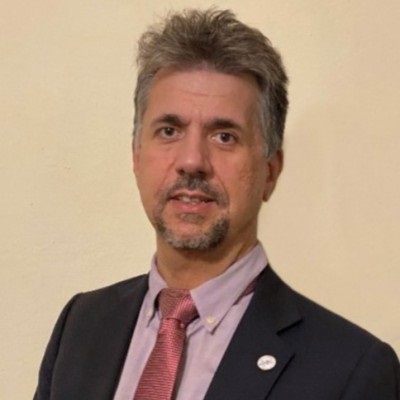
Marco Buoni